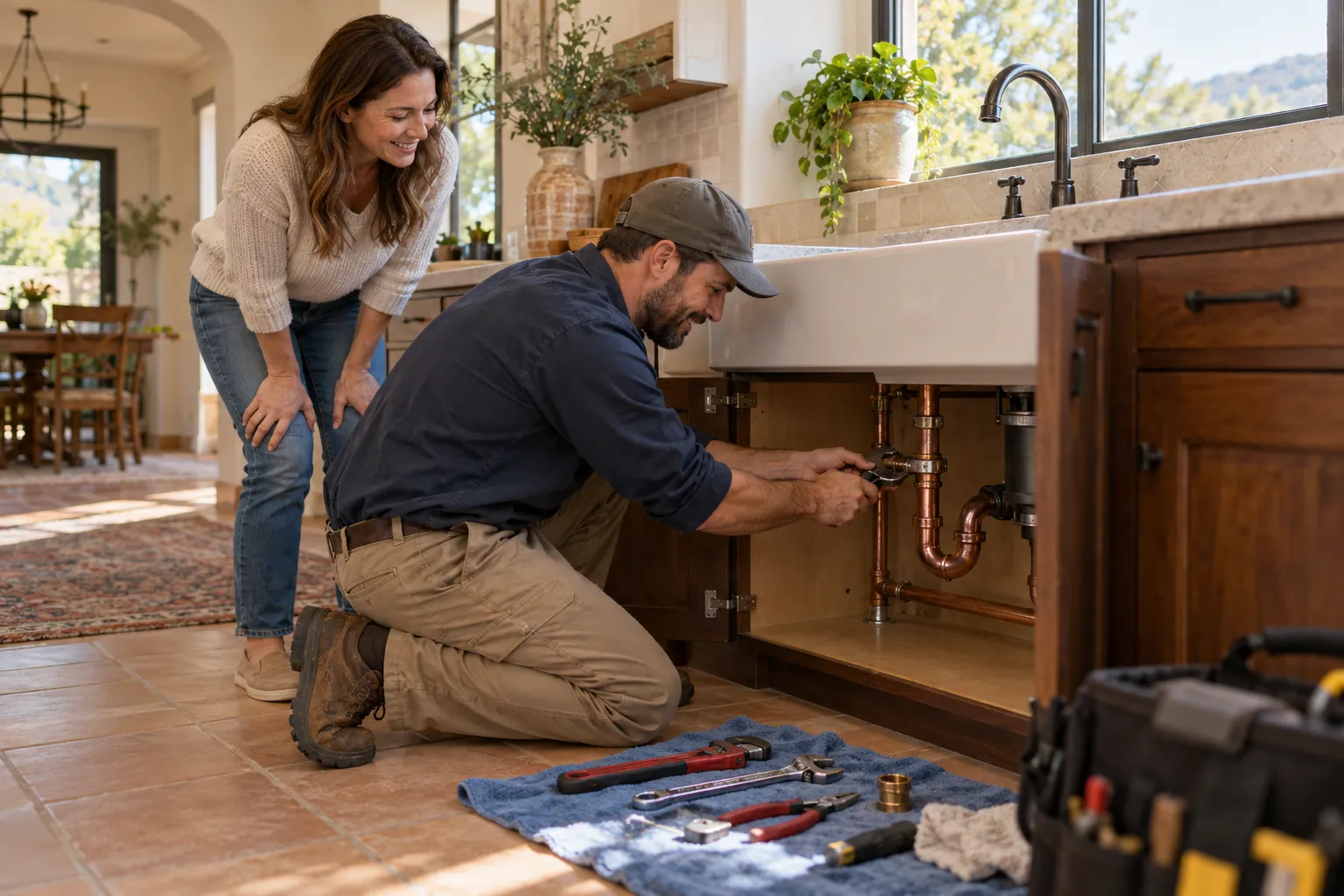
Home Emergency Plumbing for First-Time Homeowners
Request an estimate from a local provider
If this is your first plumbing emergency, start with one rule: stop the water, then get help. Most serious leaks, burst pipes and failed water heaters can be slowed by a few simple actions you can take yourself.
Votejournalist Plumbing is a referral service. This guide explains what is happening in plain terms and helps you connect with independent providers in our network across the Antioch area. The provider does the work, not Votejournalist Plumbing. Ask for a written quote before work begins, so you know the scope and the price. Many providers can respond quickly, and availability varies, so ask when you reach one. Read on for the first steps to take, how to spot a true emergency, and what to ask before you say yes to a repair.
Plumbing Emergency? First Hour First
Take a breath. Most plumbing emergencies are manageable if you act in the right order. Your first job is not the repair. It is to limit the damage.
Here is the short version:
- Stop the water at the main shutoff.
- Turn off the power if water is near outlets or appliances.
- Move belongings out of the wet area.
- Take photos of the damage.
- Contact a local provider.
Stop the Water: Find the Main Shutoff
The main shutoff valve controls all water entering your home. Know where it is before you need it. Many stucco ranch homes on slabs have it on an outside wall near the front, or in a utility box near the street. Some older bungalows have it in a garage, a closet or a crawl space.
Turn it clockwise until it stops. A lever-style valve closes with a quarter turn. A round wheel handle may take several turns.
If you cannot find it or it will not turn, do not force it. A stuck valve can snap. Tell the provider about it right away.
What Counts as a Plumbing Emergency?
An emergency is any plumbing failure that is causing damage now or will soon. Examples:
- A burst or split pipe spraying or pooling water
- Sewage backing up into tubs, showers or floor drains
- A water heater leaking from the tank
- No water at all, with signs of a break
- A gas smell near a gas water heater
A dripping faucet or a slow sink is not an emergency. It can wait for a normal appointment.
If you smell gas, leave the home and contact your gas utility or emergency services first. Plumbing can wait.
Why Fast Action Matters
Water moves into drywall, flooring and insulation quickly. Wet materials can grow mold in a matter of days. Slab homes add a hidden risk: a leak under the concrete may show up as warm floor spots or a water bill that jumps.
Sewage is a different problem. It carries bacteria, so keep children and pets away and avoid contact with the water.
Acting early usually means a smaller repair and less drying work.
What an Emergency Plumber Does
An emergency plumber finds the source, stops the leak and makes the system safe. That often means a temporary or permanent fix on the first visit. Some jobs need a second visit for parts or larger work.
Typical tasks include:
- Locating a leak with listening gear or a camera
- Replacing a split section of pipe
- Swapping a failed valve or supply line
- Draining and replacing a damaged water heater
- Advising on drying and cleanup
The provider should explain the problem in plain words and give a written quote before starting.
Burst Pipes and Cold Snaps
Our area has mild temperatures near the coast, so freezing is less common. But winter nights can still dip low inland, and uninsulated pipes in garages, crawl spaces and outside walls are at risk.
If a pipe has frozen, shut off the water first. Open the faucet nearby. Warm the pipe slowly with a hair dryer or warm towels. Never use an open flame.
If a pipe has already split, leave the water off and call for help. Thawing can release a sudden flood.
Older Pipes and Winter Rain
Long dry seasons shift soil. Then winter rain events soak it again. That movement can stress older pipes, especially in 1950s to 1980s tract homes and older bungalows with aging galvanized or early copper lines.
A sudden drop in water pressure, rusty water or damp patches on a slab floor can all point to a failing line. Mention these signs to the provider.
Water Heater Emergencies
A water heater is a tank under pressure. When it fails, it can leak steadily or release a lot of water at once.
Do this:
- Turn off the cold water supply valve on top of the tank.
- Switch off power at the breaker, or set a gas unit to pilot or off.
- Do not touch a tank that feels hot to the touch or is steaming.
- Keep clear of any hissing or popping sounds.
A leak from the tank body usually means replacement. A leak from a fitting or valve may be a smaller repair.
Choosing an Emergency Plumber
Stress makes it easy to accept the first offer. Slow down for two minutes and check the basics.
- Ask if the provider is licensed in your state, and ask for the number.
- Ask about insurance coverage for the work.
- Request a written quote before work starts.
- Ask whether after-hours or urgent rates apply.
- Ask when they can arrive. Availability varies.
Quote before work is the rule that protects you. If the scope changes, ask for the new price in writing.
What to Tell the Provider
Clear details speed things up. Be ready to say:
- Where the water is coming from
- Whether you shut off the main, and if it worked
- The age and type of your home
- Any sewage, gas smell or electrical concern
- Photos, if you have them
Insurance and Documentation
Some policies may cover sudden damage, though gradual leaks are often excluded. Check your policy. Take photos and video before cleanup, and keep receipts. Providers can often help document damage for a claim.
After the Repair
Once the leak is fixed, the work is not quite done. Ask the provider what they changed and what they saw.
- Dry affected areas fully and quickly. Fans and open windows help. Wildfire smoke days may limit that, so use a dehumidifier if air quality is poor.
- Watch for stains, musty smells or soft flooring over the next few weeks.
- Check your water meter with all fixtures off. A moving dial suggests a hidden leak.
- Label your main shutoff so anyone in the home can find it.
If you feel unsure about any step, you can reach a provider through the request form or Request a callback to check provider availability.
What's Included
Leak Response
Providers can locate the source of a burst or leaking pipe, stop the flow and make the system safe for your household.
Pipe Repair
Split, corroded or failed pipe sections can be repaired or replaced, depending on the pipe type and its condition.
Water Heater Issues
Leaking tanks, failed valves and supply line problems can be assessed and fixed.
Written Quotes
Ask for a written quote before work starts, so scope and price are clear up front.
Typical Emergency Plumbing Costs
These are typical U.S. ranges. Real prices vary by home, pipe material, access and timing. After-hours work may cost more. Always ask for a written quote before work begins.
| Service | Typical range | Notes |
|---|---|---|
| Emergency service call | $100 – $300 | Often charged on top of repair work |
| Burst pipe repair | $150 – $1,000 | Depends on pipe type and access |
| Leak detection | $150 – $600 | Higher for slab or hidden leaks |
| Water heater repair | $150 – $600 | Valves, thermostats or fittings |
| Water heater replacement | $1,200 – $3,500 | Tank or tankless, plus installation |
| Shutoff valve replacement | $150 – $500 | Main valves cost more |
How It Works
Stop the water
Close the main shutoff valve, and turn off power if water is near outlets or appliances.
Document the damage
Take photos and video of the leak and any wet areas before you move things.
Request an estimate
Use the form to describe the problem and be matched with a local provider.
Review the quote
Read the written quote, ask questions, and approve the work only when it is clear.
Why Call Votejournalist Plumbing
Plain Explanations
Each term is explained once, in simple words, so you can follow what is happening in your home.
Local Providers
You are connected with independent providers in our network who serve homes across your area.
Quote First
Ask each provider for a written quote before work starts, so the price is clear in advance.
Clear Referrals
Votejournalist Plumbing refers you. The provider does the work and sets its own terms.
Other Services
Need home emergency plumbing in Antioch?
- Plain steps for the first hour
- Providers handle the actual work
- Ask for a written quote
- Request an estimate online
Home Emergency Plumbing FAQ
What should I do first when a pipe bursts?
Shut off the main water valve right away. Then turn off the power if water is near outlets or appliances. Move valuables, open a faucet to drain the lines, take photos, and contact a local provider for help.
How much does an emergency plumber cost?
Emergency service calls often run about $100 to $300 before repairs, and total costs vary by job. After-hours work may cost more. Ask for a written quote before work starts.
Will my insurance pay for a burst pipe?
Some policies may cover sudden damage, but gradual leaks are often excluded. Check your policy and talk to your insurer. Photos and receipts help, and providers can often help document damage for a claim.
Request a callback
Send a request through the form or email contact@votejournalist.garden. Tell us what is happening, and we will point you to a provider in our network.
No obligation