Sewer Line Repair Services
Request an estimate in minutes
A sewer line carries every drop of waste water out of your home. When it cracks, sags, or clogs with roots, sewage has nowhere to go but back inside. Homes in the Antioch area often have older pipe under slabs and yards, so problems can build quietly for years before they show up.
Votejournalist Plumbing is a referral service. We explain what is happening in plain terms, then connect you with independent providers in our network who handle sewer line repair. The provider inspects the pipe, explains the options, and gives you a written quote before any work begins. Votejournalist Plumbing does not do the work itself. If you are in Antioch, CA and see slow drains or smell sewage, ask for an estimate.
Sewage backing up? Stop the water first
Sewage in a tub, shower, or floor drain usually means the main sewer line is blocked or broken. The main line is the large pipe that carries all household waste to the street or a septic tank. Work through these steps in order.
- Stop the water. Stop using sinks, toilets, showers, and the washer. Every flush adds to the backup.
- Keep people and pets away from the wet area.
- Stay clear of standing water near outlets and appliances.
- Open windows if the smell is strong.
- Photograph the damage before you clean anything.
- Request an estimate, or call a provider to check availability.
Keep people and pets clear
Raw sewage carries bacteria. Children, pets, and anyone with a weak immune system should stay out. If you must enter, wear rubber boots and gloves. Never mix cleaning chemicals. Hold off on deep cleaning until the source is fixed, or the mess will return.
Signs your sewer line is failing
The main line often gives warnings before it fails. Learn to tell urgent signs from slow ones.
Urgent signs
- Gurgling or backups in several drains at once
- A toilet that bubbles when the washer drains
- Sewage smell indoors or in the yard
- A wet, sunken patch of lawn over the pipe
Slower warnings
Look for slow drains throughout the house, repeat clogs, unusually green patches in the yard, cracks in a slab, or rodents near the foundation. One slow sink is usually a local clog. Several slow fixtures point to the main line.
What damages a sewer line
Roots and old pipe
Many 1950s to 1980s tract homes have clay, cast iron, or fiber pipe. Joints loosen with age. Roots slip in through the gaps, hunting for moisture, especially after long dry seasons. Once inside, they thicken and catch debris.
Soil and weather
Ground shifts under slabs and raised foundations. Heavy winter rain soaks the soil and can make a weak pipe sag or collapse. A sag is called a belly. Waste settles in it and blocks the line again and again. Wipes and grease make it worse.
How sewer problems are diagnosed
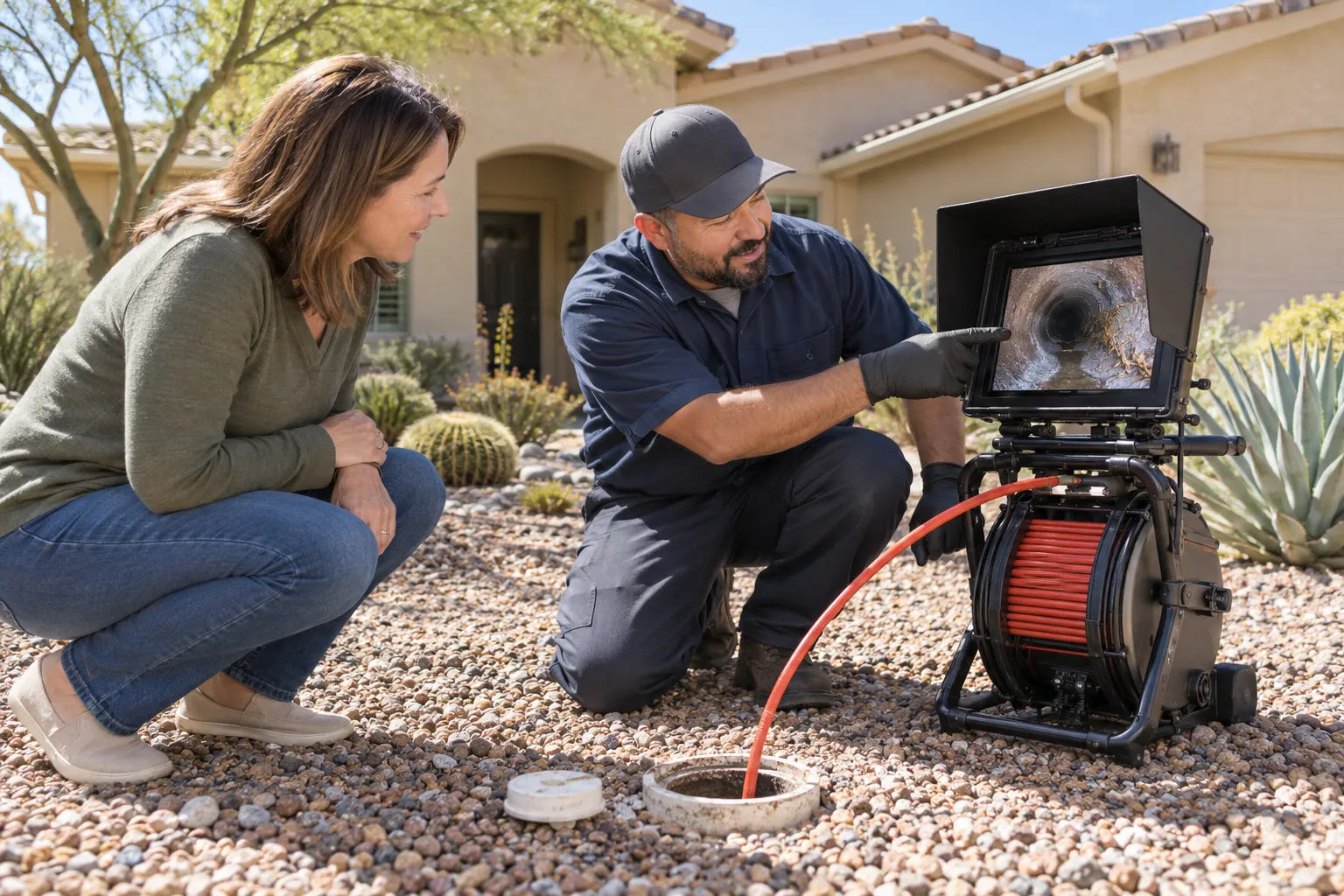
A provider feeds a small camera on a cable into the line, usually through a cleanout. That is the capped access pipe outside the home. The video shows cracks, roots, bellies, and breaks. A locator tool then marks the problem's depth and position on the surface.
Ask to see the footage. Ask what the inspection costs before it starts. Blocked pipe services may clear a clog, but the camera shows whether the pipe itself is damaged.
Request a callback to check provider availability.
Sewer line repair options
The right fix depends on what the camera finds. A good provider explains why one option fits and the others do not.
Spot repair
If damage is short, the provider digs down and replaces only that section. It costs less, but it needs access to the pipe.
Pipe lining
Lining is a trenchless method. A resin sleeve is placed inside the old pipe and hardens into a new pipe wall. It suits pipes that are cracked but still in shape. It does not fix a collapsed or badly sagging pipe.
Full replacement
Severe damage may need a new line. Some providers dig a trench. Others use pipe bursting, which pulls new pipe through the old path while breaking the old one apart. Trenchless options can leave more of the yard and driveway intact.
Permits and property lines
In many areas, you own the pipe from the house to the connection at the property line or street. The city or utility may own the rest. Ask your local utility where the line changes hands before you agree to a repair.
Digging often needs a permit and an inspection. The provider usually handles the paperwork, but confirm that and ask who pays the fees. Underground utilities must be marked before digging starts.
Some policies may cover sudden damage. Check your policy. Providers can often help document damage for a claim.
Questions to ask the plumber
Get answers before you sign. Quote before work.
- Can I see the camera footage?
- What is the written quote, and what could change it?
- Which repair method do you recommend, and why?
- Who pulls the permit?
- How much of the yard, slab, or driveway will be disturbed?
- What does the warranty cover, in writing?
After the repair
Keep the footage, the invoice, and the warranty paperwork. Flush only toilet paper. Keep grease and wipes out of the line. Have the provider inspect it again if slow drains return.
Request a callback to check provider availability.
What's Included
Camera Inspection
A small camera travels the line and shows cracks, roots, and sags on video.
Pipe Location
A locator marks the depth and spot of the damage before anyone digs.
Repair or Lining
Providers can fix a short section, line the pipe, or replace it, based on findings.
Written Quote
You get the scope and price in writing before the work begins.
Typical Sewer Line Repair Costs
Prices vary a lot with pipe depth, length, access, and local permit rules. These are typical U.S. ranges only. Always get a written quote that lists what is included before you approve work.
| Service | Typical range | Notes |
|---|---|---|
| Camera inspection | $100 – $500 | Often priced separately from repairs |
| Cleanout installation | $500 – $2,000 | Gives easier access to the main line |
| Spot repair | $1,000 – $4,000 | Short damaged section, digging required |
| Pipe lining | $3,000 – $10,000 | Trenchless, depends on length and diameter |
| Full line replacement | $3,000 – $25,000 | Trench or pipe bursting, longer runs cost more |
| Permit and inspection | $50 – $500 | Varies by city and job size |
How It Works
Stop the Water
Stop using drains and toilets, keep people away from the mess, and photograph the damage for your records.
Request an Estimate
Send your details through the estimate form, or Request a callback to check provider availability.
Review the Findings
The provider inspects the line, shows you the footage, and explains the repair options.
Approve the Quote
Read the written quote, ask questions, and approve only when it is clear.
Why Call Votejournalist Plumbing
Plain-Language Explanations
Technical terms are explained once, so you understand your options before deciding.
Local Providers
You are connected with independent providers who work in your area and know local conditions.
Written Quotes
Ask for the scope and price in writing before work starts, with no pressure to decide.
No Obligation
Requesting an estimate does not commit you to hiring any provider.
Other Services
Need sewer line repair services in Antioch?
- Plain steps for the first hour
- Providers handle the actual work
- Ask for a written quote
- Request an estimate online
Sewer Line Repair Services FAQ
How do I know if my sewer line is broken or just clogged?
A single slow drain is usually a local clog. If several drains back up together, toilets gurgle, or sewage smells show up, the main line is likely the problem. A camera inspection confirms it.
Who pays for sewer line repair, the homeowner or the city?
In many areas, the homeowner owns the pipe from the house to the property line or street connection. The city or utility may own the rest. Check with your local utility and your policy, since some policies may cover sudden damage.
Can a sewer line be repaired without digging up my yard?
Sometimes. Trenchless methods like pipe lining and pipe bursting need only small access holes. They do not suit every pipe, so the camera findings decide. Ask the provider why a method fits your line.
Request a callback
Send a request through the form or email contact@votejournalist.garden. Tell us what is happening, and we will point you to a provider in our network.
No obligation